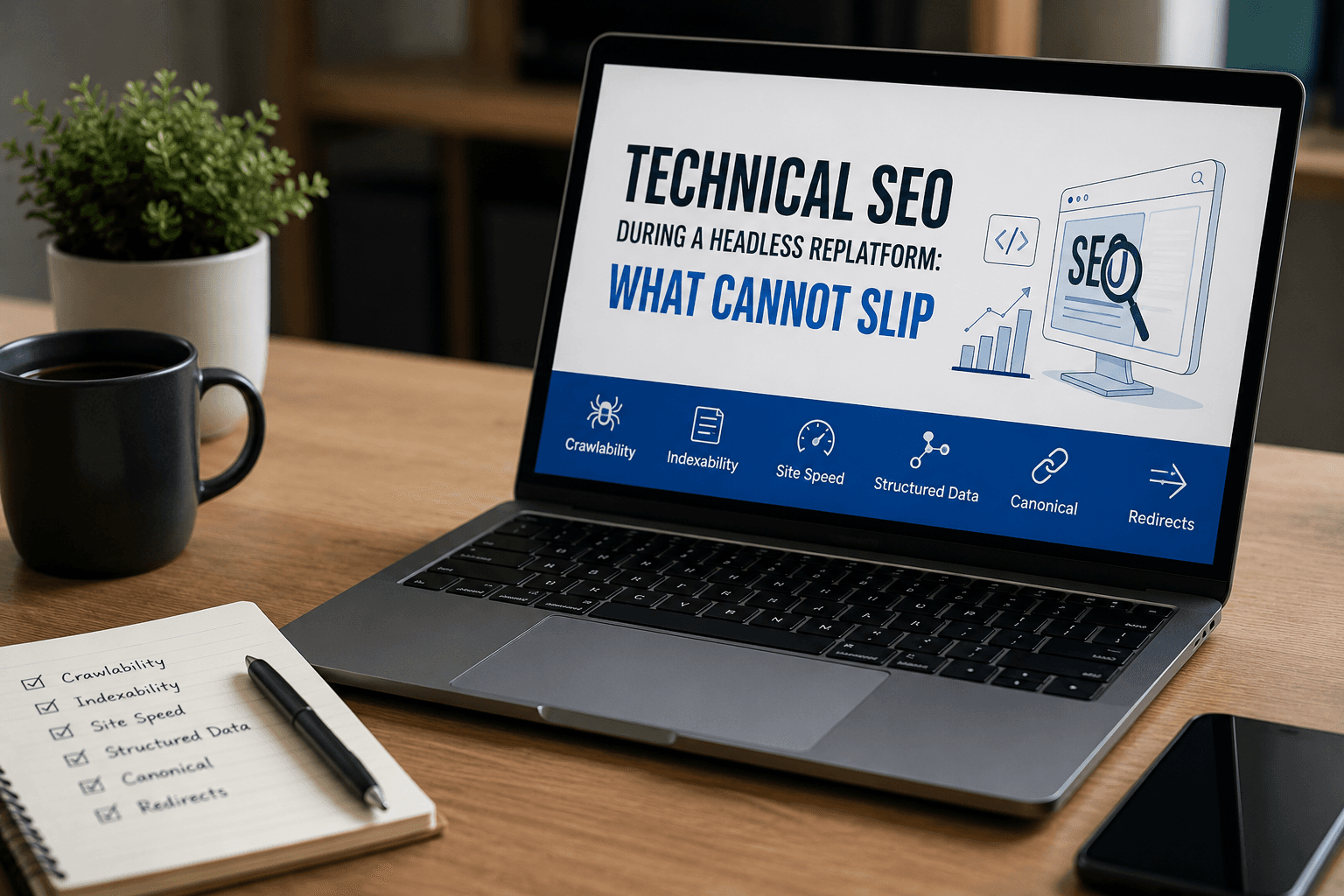
Search performance survives a replatform when the new site preserves crawl signals, intent alignment, and internal authority. That means fewer opinions and more verification.
01
Keep crawl signals equivalent
If Google sees different canonicals, robots directives, or structured data after launch, the migration introduces uncertainty immediately.
- Match canonical intent page-by-page, not template-by-template.
- Carry over robots rules, XML sitemap coverage, and indexation controls.
- Validate schema on high-value templates like articles, services, FAQs, and organization pages.
02
Protect internal authority
The redirect map is only part of the story. Internal links, breadcrumbs, related content, and contextual anchors also shape how authority flows through the site.
Retain strong internal links from top-trafficked pages.
Rebuild breadcrumbs and related-content modules in the new CMS model.
Watch for orphaned pages caused by changed navigation patterns.
03
Use a launch QA pass that compares old and new
A replatform needs differential QA. Reviewing only the new build in isolation hides regressions that matter to search engines.
- Compare metadata exports between old and new environments.
- Crawl staging and production to catch 404s, loops, and canonicals.
- Review logs and Search Console closely for the first two weeks after release.