LetsCodex0%
Loading the migration studio…
Skip to content
LetsCodex
ServicesWorkBlogProcessToolsPricingTeam
Book audit
ServicesWorkBlogProcessCMS pickerToolsPricingCare plansTeamBook a migration audit
LetsCodexLetsCodex
LetsCodex

We migrate growth teams off WordPress to Next.js + a headless CMS.

Next.js · Sanity · Strapi · Payload CMS

Services

WordPress → Next.jsHeadless CMS + Next.jsFigma → Next.jsCMS pickerProcess

Company

WorkBlogPricingCare plansTeamPrivacy policy

Contact

hello@letscodex.comBook a migration audit
© 2026 LetsCodexHeadless migration for growth-focused teams
Home/Blog/Headless CMS Implementation Cost: A Realistic Breakdown
Buying guide
BusinessJuly 7, 2026Updated July 7, 20267 min read

Headless CMS Implementation Cost: A Realistic Breakdown

What actually drives the cost of implementing a headless CMS like Sanity, Payload, or Strapi, and how it compares to a traditional CMS build.

Mubeen HassanFounder, LetsCodex
Headless CMS Cost

A headless CMS platform is often free or low-cost to license. The implementation cost lives almost entirely in schema design, editor experience, and the custom frontend needed to render the content, which is different math than a traditional CMS quote.

Weighing Sanity against Payload or Strapi for the build?

Compare the three platforms

Get a scoped estimate for your specific content needs.

Use the cost calculator
01

What you are actually paying for

Unlike WordPress, there is no default theme or admin UI to fall back on. Every part of the experience is built intentionally.

  • Content schema design: defining document types, fields, and relationships that match how the team publishes.
  • Studio or admin configuration: making the editing interface usable for non-technical staff.
  • Frontend build: the Next.js (or other) application that queries and renders the content.
  • Preview and workflow tooling: draft states, live preview, and publishing permissions.
02

How platform choice affects cost

Sanity, Payload, and Strapi differ in hosting model and how much comes configured out of the box, which shifts where the cost lands.

  • Sanity's hosted Studio reduces admin UI build time but content modeling still needs deliberate design.
  • Payload's code-first schema gives more control but requires more upfront engineering time.
  • Strapi's self-hosted model adds infrastructure and maintenance cost beyond the initial build.
  • None of the three meaningfully change frontend build cost, since that work is framework-side either way.
03

Cost ranges by project type

Directional guidance, not a quote. Scope always dominates the final number more than the CMS platform chosen.

  • New marketing site with a headless CMS from scratch: schema, studio, and frontend all built together, typically the same range as a full site rebuild.
  • Migrating an existing WordPress site to headless: adds content audit and migration effort on top of the build.
  • Adding a headless CMS to an existing Next.js frontend: usually the smallest scope, focused on schema and query integration.
04

How to keep the cost predictable

Most overruns come from schema decisions made too late, after editors are already using the system.
Finalize the content model with real editor input before frontend work starts.
Decide preview and workflow requirements upfront rather than adding them after launch.
Scope the frontend build and CMS setup as one project, not two separate estimates.
Keywords
headless cms implementation costheadless cms developmentpayload cms development agency
Need help?

Want a clear cost breakdown for your headless CMS project?

We scope schema design, editor tooling, and frontend build as one estimate, not a vague platform quote.

Book a migration audit
FAQ

Common questions

01

Is a headless CMS more expensive than WordPress?

The initial build usually costs more since there is no default theme system to lean on. Ongoing costs are often lower because there is less plugin maintenance and security overhead.

02

Does Sanity or Strapi cost more in licensing?

Sanity's hosted plans scale with usage; Strapi is typically self-hosted with its own infrastructure cost. Payload is open-source and self-hosted as well. Licensing is usually a smaller line item than the implementation work itself.

03

Can we start small and expand the CMS later?

Yes. A well-designed schema can start with the content types needed at launch and expand without a full rebuild, as long as the initial modeling was done deliberately.

Continue reading

Related posts

Rebuild vs Migrate
Business7 min read

Should You Rebuild on WordPress or Migrate to Next.js?

A decision framework for choosing between a WordPress rebuild and a migration to Next.js, based on performance needs, editor workflow, and growth plans.

July 7, 2026Read →
Migration Cost
Business7 min read

WordPress to Next.js Migration Cost: What to Expect

A realistic breakdown of what drives the cost of migrating a WordPress site to Next.js, with ranges by site size and complexity.

July 7, 2026Read →
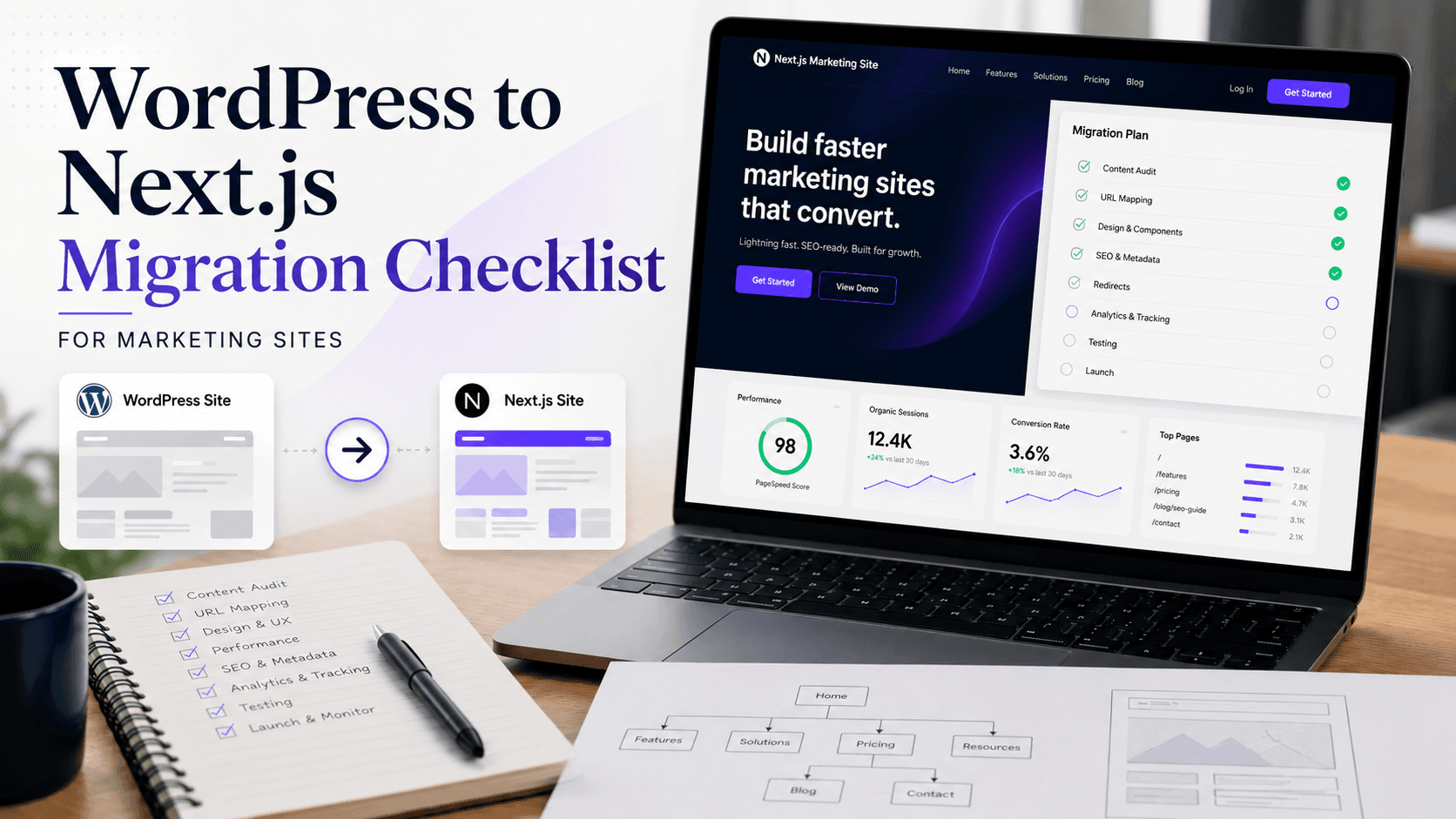
Editorial cover image showing a WordPress to Next.js migration workflow with redirects, content modeling, and performance planningWP -> Next
Migration8 min read

WordPress to Next.js Migration Checklist for Marketing Sites

A practical migration checklist for moving a marketing site from WordPress to Next.js without breaking rankings, forms, or publishing workflows.

May 12, 2026Read →
Next step

Want a clear cost breakdown for your headless CMS project?

We scope schema design, editor tooling, and frontend build as one estimate, not a vague platform quote.

Book a migration audit ↗See our work